





Turf Burn Prevention with Solar Screens
Protect your artificial turf investment from Low-E window reflections
Request a free estimate — no obligation
Schedule a Free Estimate
Now accepting weekend appointments!
Call (702) 847-8007
Customize your home with custom screen solutions. Contact Good Window Screens today to schedule your free estimate.
~200°F
Turf hot spot temperature
100%
Reflections eliminated
Same-day
Installation available
$0
Cost to get a quote
Photo Gallery
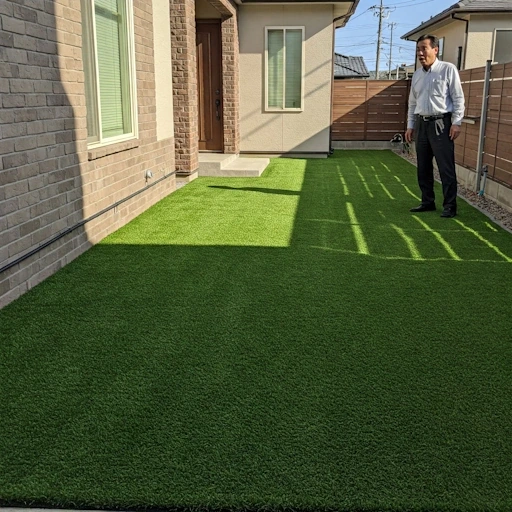
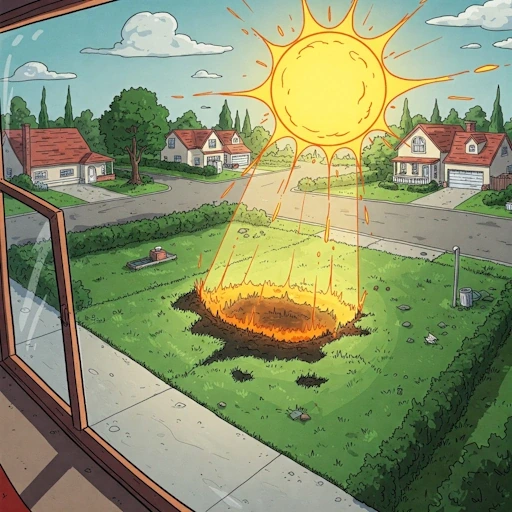
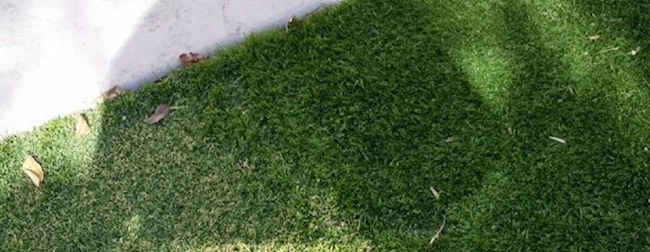
Click any photo to enlarge
Low-E Windows Are Melting Las Vegas Turf
Energy-efficient Low-E windows are great for keeping heat out of your home — but they can also act like a lens, concentrating and reflecting sunlight onto your lawn at temperatures exceeding 200°F. Synthetic grass isn't designed to withstand focused heat of that intensity, and the result is warped, melted, or discolored turf that's expensive to repair or replace.
The metallic coating on Low-E glass is the culprit. While it does an excellent job rejecting radiant heat from entering the home, it simultaneously focuses reflected light outward in a concentrated beam. On a clear Las Vegas afternoon, that beam can be several times more intense than direct sunlight — hot enough to destroy synthetic turf fibers within minutes of sustained exposure.
West-facing windows are the most problematic. During peak summer months, the Las Vegas sun tracks low on the western horizon between 2 and 6 PM — exactly when solar intensity is highest and window angles create the sharpest reflection geometry. Homes built after 2000 are disproportionately affected because modern energy codes mandated Low-E glass as standard, making this a newer problem that older neighborhoods with single-pane windows often don't experience at all.
Solar screens interrupt this process at the source. Installed on the exterior of the problem-facing windows, the mesh diffuses and absorbs sunlight before the focused reflection can form. Unlike shade sails, window film, or turf protectors, solar screens address the root cause — the reflection itself — rather than just trying to shield the turf after the fact. Homeowners who install solar screens on the offending windows consistently report the melting issue fully resolved.
You don't need to screen the entire house. During our free on-site estimate, we identify the exact windows casting damaging reflections and measure only those.
- Eliminates focused window reflections before they reach the ground
- Protects your synthetic turf investment from heat damage
- Works on the root cause — not just a symptom
- Lowers indoor temperatures as a bonus benefit
- Adds daytime privacy and curb appeal
- Far less expensive than turf repair or replacement
See pricing and material options or contact our team for a free estimate.
How Low-E Glass Destroys Synthetic Turf
The physics make it clear why only an exterior solution permanently resolves this problem.
1 — Intense Las Vegas sun
Las Vegas receives more than 300 sunny days per year with UV and solar intensity among the highest in the United States.
2 — Low-E metallic coating
The metallic oxide layer on Low-E glass reflects outward rather than dispersing. It concentrates sunlight into a focused beam aimed at whatever is below or in front of it.
3 — Extreme heat concentration
The focused beam reaches ground-level temperatures of 175–200°F — several times hotter than the direct sun on the same spot would produce alone.
4 — Turf fibers melt
Polyethylene turf blades begin to soften around 175°F and deform permanently above 200°F. Visible warping and discoloration can appear within minutes of sustained exposure.
Why Solar Screens Work When Other Fixes Don't
Homeowners often try several approaches before finding a permanent solution. Here's how they compare.
Solar Screens Recommended
- ✓ Eliminates the reflection at the glass surface
- ✓ Permanent fix — installed once, works indefinitely
- ✓ Also reduces indoor heat and lowers AC bills
- ✓ Affordable solution
Shade Sails & Awnings
- ✗ Blocks direct sun but not the reflected beam
- ✗ The reflection angles around shade structures
- ✗ Expensive to install and maintain
- ✗ Does not solve the root cause
Interior Window Tint / Film
- ✗ Applied inside the glass — reflection still exits outward
- ✗ Does not stop the focused beam from forming
- ✗ Can void Low-E window warranties if improperly applied
- ✗ Does not protect turf
Moving or Replacing the Turf
- ✗ Expensive — turf runs $8–15/sq ft installed
- ✗ Doesn't fix the reflection — new turf melts too
- ✗ Landscape reconfiguration is time-consuming
- ✗ Treats the symptom, not the cause
The Problem — and the Fix
Low-E glass creates a magnifying effect. Solar screens break it up before it leaves the window.
Without Solar Screens
Low-E reflection goes unchecked
- ✗ Concentrated hot spots exceed 200°F at turf level
- ✗ Synthetic grass warps, melts, or discolors
- ✗ Turf warranty may be voided by heat damage
- ✗ Replacement costs hundreds to thousands of dollars
With Solar Screens Installed Solved
Reflection diffused at the glass surface
- ✓ Focused reflection broken up before it forms
- ✓ Turf surface temperatures drop to safe levels
- ✓ Turf stays protected and looking its best
- ✓ Home stays cooler — lower AC bills as a bonus
Frequently Asked Questions
Request a free estimate — we serve Las Vegas, Summerlin & surrounding communities.

 (702) 847-8007